13th EAN Workshop on « ALARA and the Medical Sector »
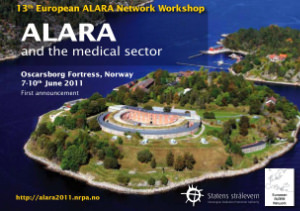
13th European ALARA Network Workshop, Norway 7-10 June 2011

“ALARA AND THE MEDICAL SECTOR”

Download the Conclusions of the Workshop

With increases in patient doses, associated increase in occupational exposures, development of new technologies and the occurrence of serious incidents and accidents, the radiation protection challenges are mounting in the medical sector.

The aim of the Workshop is to consider how the ALARA principle can be effectively implemented with regard to both patient and staff exposures in diagnostic and therapeutic uses of ionising radiation.

The Workshop was a platform, bringing together relevant European medical professionals, networks and other stakeholders working with the ALARA principle, to exchange practical ideas and experiences and to identify further improvements related to better implementation of the optimisation principle in the medical sector.

Working Group Topics

  1. Challenges for the optimization of patient and staff radiation protection in the medical sector
    Keywords: Parameters for ALARA benchmarking, high-dose diagnostic and therapy procedures, socio-economic factors, reward systems, unnecessary exposure, etc.
  2. Policies and tools for implementing the ALARA principle in the medical sector
    Keywords: Referral criteria, recommendations, standards and guidelines, audits, inspections, justification issues, DRLs, etc.
  3. Education, training and communication to improve ALARA in the medical sector
    Keywords: ALARA culture, multi-disciplinary and multi-media approach, key competences, harmonization issues, exchange of knowledge, networking, etc.
  4. Technical developments and quality assurance in the implementation of the ALARA principle in the medical sector
    Keyword: Effective quality control, conception of equipments, costs, evidence base for new technology, hybrid systems, justification issues etc.
Read more

12th EAN Workshop

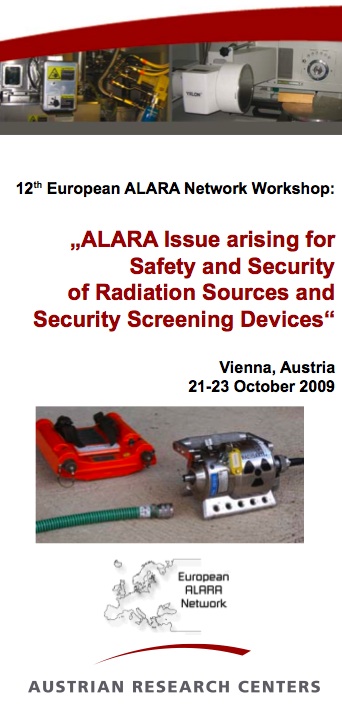
"ALARA issues arising for Safety and Security of Radiation Sources and Security Screening Devices", Vienna, Austria, 21-23 October 2009

ean12.jpgpdf.pngDownload the Conclusions of the Workshop (without references)
pdf.pngDownload the Conclusions of the Workshop (with references)
pdf.png
Download Special Issue of the ALARA Newsletter dedicated to the Workshop

Background and objectives
Radiation protection has always included security-related provisions, for example measures to prevent the unauthorised use and illegal transfer of sources, which have contributed to the overall system of radiation safety. In recent years, however, interest in security issues has dramatically increased and the challenge is to ensure that safety and security measures are designed and implemented in an integrated manner so that security measures do not compromise safety and safety measures do not compromise security.

The aim of the Workshop was to consider how the implementation of ALARA, in terms of planned and emergency exposure situations, involving worker and public doses, is affected by the introduction of these new security-related measures. In the case of new equipment and procedures, there is also the question of whether exposures arising from security screening devices can be justified. In addressing these issues, the Workshop aimed to consider how an optimum balance between protection, safety and security can be achieved.

Read more

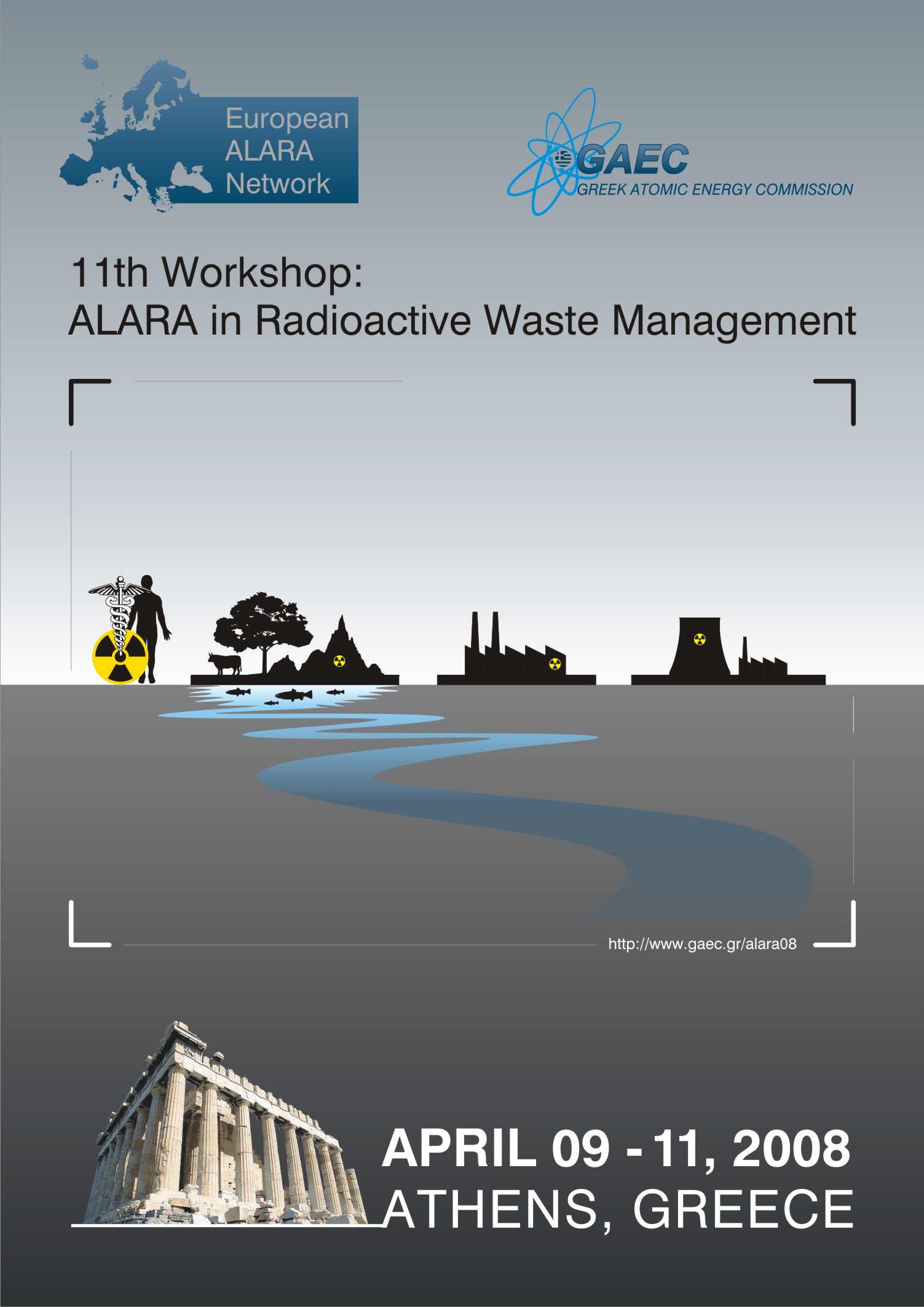
11th Workshop on « ALARA in Radioactive Waste Management »

« ALARA in Radioactive Waste management », Athens, Greece, 9-11 April 2008

ws11.jpg

pdf.pngDownload the Conclusions and Recommendations


See the pictures of the 11th Workshop

The aim of the 11th EAN Workshop was to focus on the implementation of the ALARA principle with regard to occupational and public exposures arising from the management of radioactive waste. This included waste from the nuclear, medical, NORM, industrial, education and research sectors.

As with previous workshops, this workshop consisted of presentations (oral and posters) intended to highlight the main issues, and a significant part of the programme was devoted to discussions within working groups with . From these discussions, participants produce drecommendations on ALARA in Radioactive Waste Management addressed to relevant local, national and international stakeholders.

Working Group Topics

  • Dealing with doses – how to take account of different dose distributions, worker and public doses, doses over long timescales, etc.
  • How should ALARA be applied and implemented in the areas of re-use and recycling of radioactive residues?
  • How should ALARA be applied and implemented in the area of disposal of radioactive waste?
  • Why should different strategies be applied to the different sectors and what should these differences be?
  • What are the main criteria that should be used for decision-making in the management of radioactive waste?


Read more

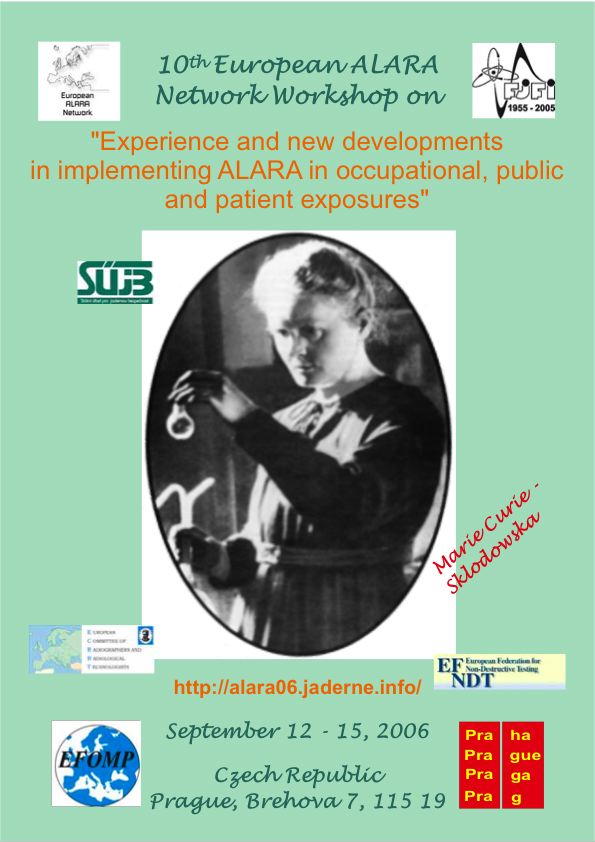
10th Workshop on « Experience and new Developments in implementing ALARA »

ean10.jpg

« Experience and new Developments in Implementing ALARA in Occupational, Patient and Public Exposures », Prague, Czech Republic, 12-15 September 2006

ean10.jpg

pdf.png Download the Summary and Recommendations

See the pictures of the 10th Workshop

Introduction
Previous EAN Workshops have focused on the optimisation principle in specific circumstances, for example for a specific work sector or particular types of exposure. The subjects have been chosen to reflect areas with potential for the further development and implementation of the concept of ALARA. 

This was the 10-year anniversary of the EAN Workshops, and the aim was to consider the optimisation principle as a whole. This principle is fundamental to radiation protection, and the Workshop aimed to draw together key stakeholders to discuss its past, present and future status. In particular, the Workshop has considered the practical implementation of ALARA, and how this might be improved in the next 10 years.

Objectives and scope of the Workshop
The main objectives of the 10th EAN Workshop were to:

  • Review the past evolution of the ALARA concept, internationally, within the EU, and nationally, in terms of the practical impact on radiation protection;
  • Examine the current status of the implementation of the ALARA principle; and
  • Identify needs for future developments in the concept and implementation of optimisation.
Read more

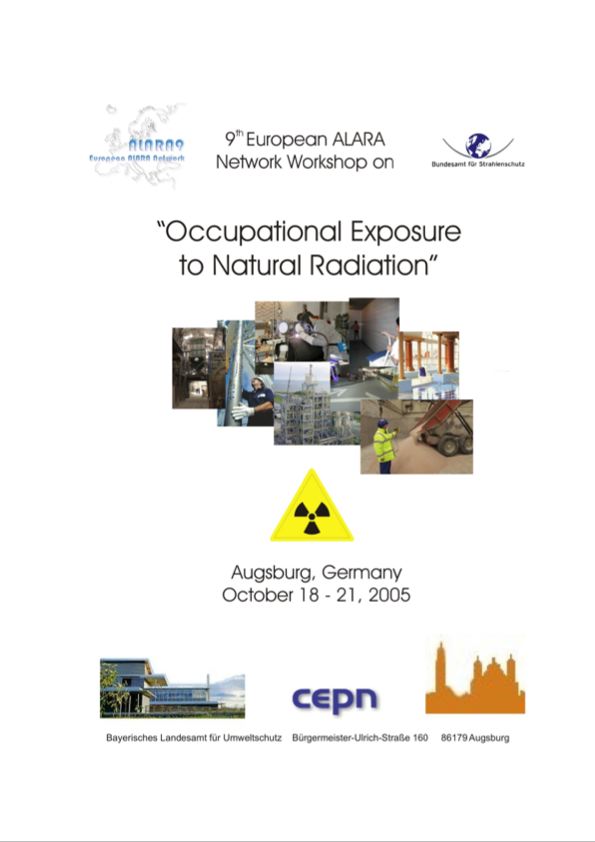
9th Workshop on « Occupational Exposure to Natural Radiation »

"Occupational Exposure to Natural Radiation", Augsburg, Germany, October 2005 

ean9.jpgpdf.png Download the Summary and Recommendations

See the pictures of the 9th Workshop

The aim of the 9th EAN Workshop was to focus on exposures arising from natural radiation sources in the workplace, in particular from Naturally Occuring Radioactive Materials (NORM) and from radon gas. Assumptions lead to estimate that it concerns approximately 100 000 workers in the NORM area in Europe and may be up to 1 000 000 exposed workers to radon.

The objectives of the Workshop were to consider the following questions:

  • How can the commitment to radiation protection be encouraged and increased?
  • How should exposure management (for NORM and radon in the workplace) be improved?

More than 50 participants from 14 European countries attented the Workshop as well as representatives of 3 International Organisations with . In total, there were 23 oral presentations, and 6 posters presentations, organised under the following subjects:

  • Introduction and scene setting
  • Increasing the commitment to radiation protection
  • Managing exposures from radon and NORM

Two afternoon sessions were devoted to discussions in small groups on the following specific issues:

  • Types of regulation and the optimisation of protection
  • Communication and stakeholder involvement
  • Practical management of radon exposures
  • Practical management of NORM exposures

The reports from these Working Groups were presented and discussed on the final day, from which the key findings and the 8 recommendations from the Workshop were derived.

Read more

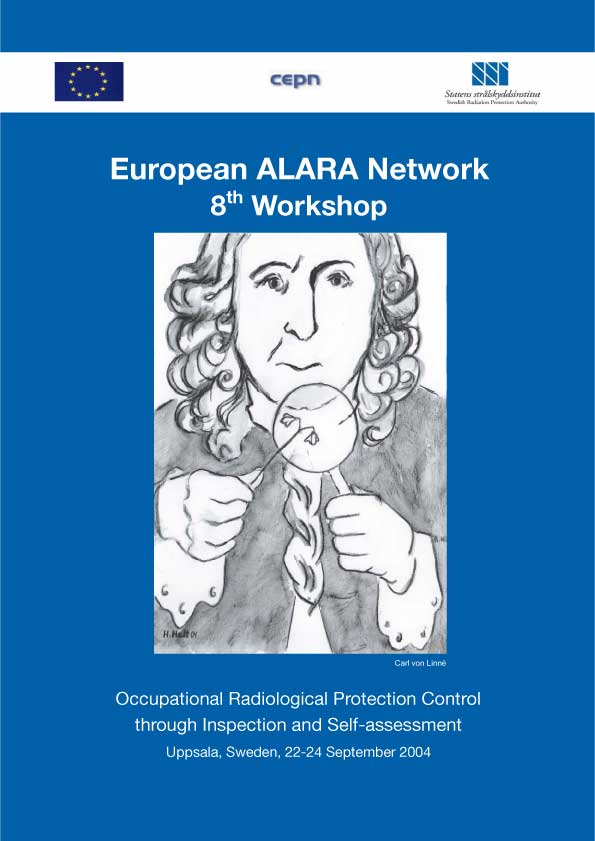
8th Workshop on « Occupational RP Control through Inspection and Self-assessment »

"Occupational Radiological Protection Control through Inspection and Self-assessment", Uppsala, Sweden, September 2004

ean8.jpg pdf.png Download the Summary and Recommendations

The 8th EAN Workshop was devoted to “Occupational Radiological Protection Control through Ispection  and Self- assessment”. The objective of the Workshop was “to assess how regulatory authorisation and inspection, and internal controls (peer reviews, self assessment, etc.) contribute to achieving ALARA for occupational exposure”. A total of 70 participants from 19 European countries attended the Workshop; respectively half and one third of the audience were from the regulatory bodies and utilities from medical and industry sectors.

In total, there were 14 oral presentations, and 10 poster presentations, organised under the following titles:

  • Setting the Scene
  • Regulatory Bodies and Control Organisations
  • Licensees and
  • Workers

The opening session included a presentation of the results of an EAN questionnaire on the size and structure of national regulatory authorities. It also identified a series of issues and questions for later consideration by the Working Groups. Half of the time was devoted to this discussions in small groups on the following specific issues:

  • Inspection
  • Self assessment
  • Workers’ involvement and
  • Communication between stakeholders

8 main recommendations were produced and unanimously agreed on by the participants. They are dealing with inspectors training,as well as with the facts – that self assessment should become a regulatory requirement and give rise to guidance – and that the workers themselves should become active “stakeholders” in these processes – or that regulatory bodies network should be set up to harmonising inspections.

Read more

7th Workshop on « Decommissioning of Installations and Site Remediation »

"Decommissioning of Installations and Site Remediation", Arnhem, The Netherlands, October 2003
ean7.jpg

pdf.png Download the Summary and Recommendations

The 7th EAN Workshop was devoted to “decommissioning and site remediation”. This was the first time that a workshop re-visited a specific topic: the 1st EAN Workshop (Saclay, 1997) was devoted to “ALARA and decommissioning”. The main objectives of the workshop were to provide a means of reviewing the recommendations of the first Workshop, progress made in the application of ALARA in decommissioning and the remaining needs both in the nuclear and non-nuclear sectors.

Some 60 participants from 11 European countries attended the Workshop. There were 20 oral presentations, mainly devoted to case studies of work undertaken in a variety of different situations (from accelerators and hot cells, to mineral wool (NORM) facilities and contaminated apartments). In addition to a scene setting session there were sessions on:

  • Site remediation and prevention of internal exposure;
  • Decommissioning of installations outside the nuclear fuel cycle;
  • Effectiveness and feedback from the use of dose and dose rates estimating factors.

The opening session reviewed the progress made with the recommendations from the 1st Workshop, and identified a series of issues and questions for later consideration in the Working Group sessions.
Read more

6th Workshop on « Occupational Exposure Optimisation in the Medical and Radiopharmaceutical Sectors »

"Occupational Exposure Optimisation in the Medical and Radiopharmaceutical Sectors", Madrid, Spain, October 2002

ean6.jpg pdf.png Download the Summary and Recommendations

The 6th EAN Workshop on "Occupational Exposure optimisation in the Medical and Radiopharmaceutical sectors" allowed more than 80 participants from 12 European countries, to attend to 31 high level oral presentations and to discuss more than 20 posters. It has been officially supported by the International Society of Radiographers & Radiological Technologists and some National Societies of medical physicists, health physics and nuclear medicine like . The participants were a mix of most concerned stakeholders: international bodies such as IAEA, national regulatory bodies, health physicists, physician from different fields, radiographers, radio pharmaceuticals manufacturers, trainers and other types of experts.

The work in small groups on six topics has been very fruitful and led to more than 12 recommendations dealing with the necessity of national and international practical guidance’s on many specific items, the role of qualified experts, the prior risk assessment, the training, the development of specific operational dosimeters:

1. Impact of BSS on Radiation Protection in the Medical Field;
2. Radiation Protection Training in the Medical Field;
3. Dose Monitoring and Medical Surveillance;
4. How to improve Safety Culture in the Medical Field;
5. Occupational Exposure for Pregnant Workers;
6. Links between Patient and Worker Doses.

Read more

5th Workshop on « Industrial Radiography: Improvements in Radiation Protection »

"Industrial Radiography: Improvements in Radiation Protection", Rome, Italy, October 2001

ean5.jpgpdf.png Download the Summary and Recommendations

The 2nd EAN Workshop on “Good Radiation Practices in Industry and Research” made a number of recommendations. For industrial radiography, improvements in radiographic equipment safety and worker training were key recommendations. This, the 5th Workshop has taken the recommendations of the 2nd workshop as a starting point.

About 70 representatives from 21 countries took part in that 5th Workshop. Most of the concerned stakeholders were represented: International Organisations (International Atomic Energy Agency-IAEA, European Commission-EC), national regulatory bodies, Non Destructive Testing (NDT) companies or professional organisations, client companies, , industrial radiography apparatus manufacturers, radiological protection training organisations, qualified experts, research centres… Special mention should be given to the role of IAEA in supporting the participation of countries from the Middle East and Eastern and Central Europe.

That Workshop allowed all stakeholders to discuss more than 20 oral and 10 posters presentations. Six working groups were respectively devoted to: “regulation”, “incidents, accidents, near misses”, “work organisation”, “training”, “safety culture” and “equipment”. Finally, that three days Workshop has led to several conclusions and recommendations for the improvement of workers radiological protection in industrial radiography.

Read more

4th Workshop on « Managing of Occupational Radiological and Non-Radiological Risks »

« Managing of Occupational Radiological and Non-Radiological Risks: Lessons to be Learned », Antwerp, Belgium, November 2000

The aim of the 4th Workshop was to provide an opportunity to put radiological risk management into context with the management of other occupational risks, by engaging interested parties (managers, workforces, contractors, regulatory bodies, communicators etc.) in the exchange of information and experience. About 50 participants attended the Workshop: with about two third coming from fields with radiological risk as a major occupational risk, the others coming from sectors with totally different types of risk, such as chemical, oil platform operation, non ionising radiation’s, poultry farming. The presence of representatives from international organisations dealing with all types of occupational diseases and injuries such as International Labour Organisation, International Atomic Energy Agency and European Commission (DG Employment) was very fruitful.

Three major conclusions were raised during that Workshop:

« To effectively manage occupational risk(s), requires the development of a common risk culture among all stakeholders. It is therefore recommended that encouragement be given to including lessons and discussions concerning risk management in the day to day life during studies as early as at school level. It is also recommended that strategies be set up at national and corporate levels to present and discuss occupational risks management with the workers, managers, media and public, as well as those in charge of regulations. It is also recommended that consideration be given to making regulations concerning risk management more clear and transparent, both in respect of the requirements and the culture needed to implement them. »

« Risk transfer is a major topic we have, and will have more and more to deal with, not only between occupational risks but also between public and occupational risks and even between human and ecological risks. Therefore it is mandatory to learn how to manage them, through a better knowledge of details of the actual transfers of risks, the factors involved and the interactions of the stakeholders in the decision making process. This could be achieved by developing studies to improve that knowledge, as well as research to define procedures and criteria relevant to making reasonable decisions. »

« The participation of all concerned stakeholders appears to be a key element in arriving at decisions that are reasonable and receive broad acceptance. »

Read more