The European ALARA Network

The European ALARA Network (EAN) promotes the optimisation of radiation protection (keeping exposures As Low As Reasonably Achievable – ALARA) across Europe. It brings together professionals, regulators, and stakeholders to share experience, develop guidance, and support the practical implementation of ALARA principles in various sectors, including industry, medicine, research, and the environment.

EC project – NDT ALARA Network

The project for the setting-up of a European ALARA Network for NDT, supported by the European Commission, ended in May 2008. The documents arising from this project are now available: Contract report, Guidance for industrial mobile radiography (Draft document), Radiation protection in NDT – Proposals for Training Standards. These documents can be downloaded on the […]

Read more

NDT ALARA Network

pdf

This project, supported by the European Commission and co-ordinated by the Health Protection Agency (UK), lasted from January 2007 to May 2008. It aimed to establish a network to facilitate the promotion of the ALARA principle in industrial radiography. Now discussions are still ongoing to establish a cooperation agreement between EAN and EFNDT (European Federation […]

Read more

ALARA Newsletter – Issue 23

The 23rd issue of the EAN Newsletter has now been published and can be downloaded in the Newsletter section.  Contents of the Issue EAN 11th Workshop: "ALARA in Radioactive Waste Management" – Conclusions and Recommendations High activity sources (HASS) in Italy and the implementation of the EU Directive Patients doses from dental radiography in the […]

Read more

Issue 23 – September 2008

pdf.pngDownload the 23rd issue in PDF format

Editorial

In February 2008 the revised ICRP Recommendations for a System of Radiological Protection (Publication n° 103) were published, formally replacing the Commission’s previous, 1990, Recommendations (see ALARA Newsletter No. 21). They reinforce the principle of optimisation of protection, which should be applicable in a similar way to all exposure situations, subject to restrictions on individual doses and risks: dose and risk constraints for planned exposure situations, and reference levels for emergency and existing exposure situations.

In that context, the present issue of the ALARA Newsletter illustrates how wide the scope of the optimisation of radiological protection is today.

Read more

11th EAN Workshop – Conclusions and Recommendations

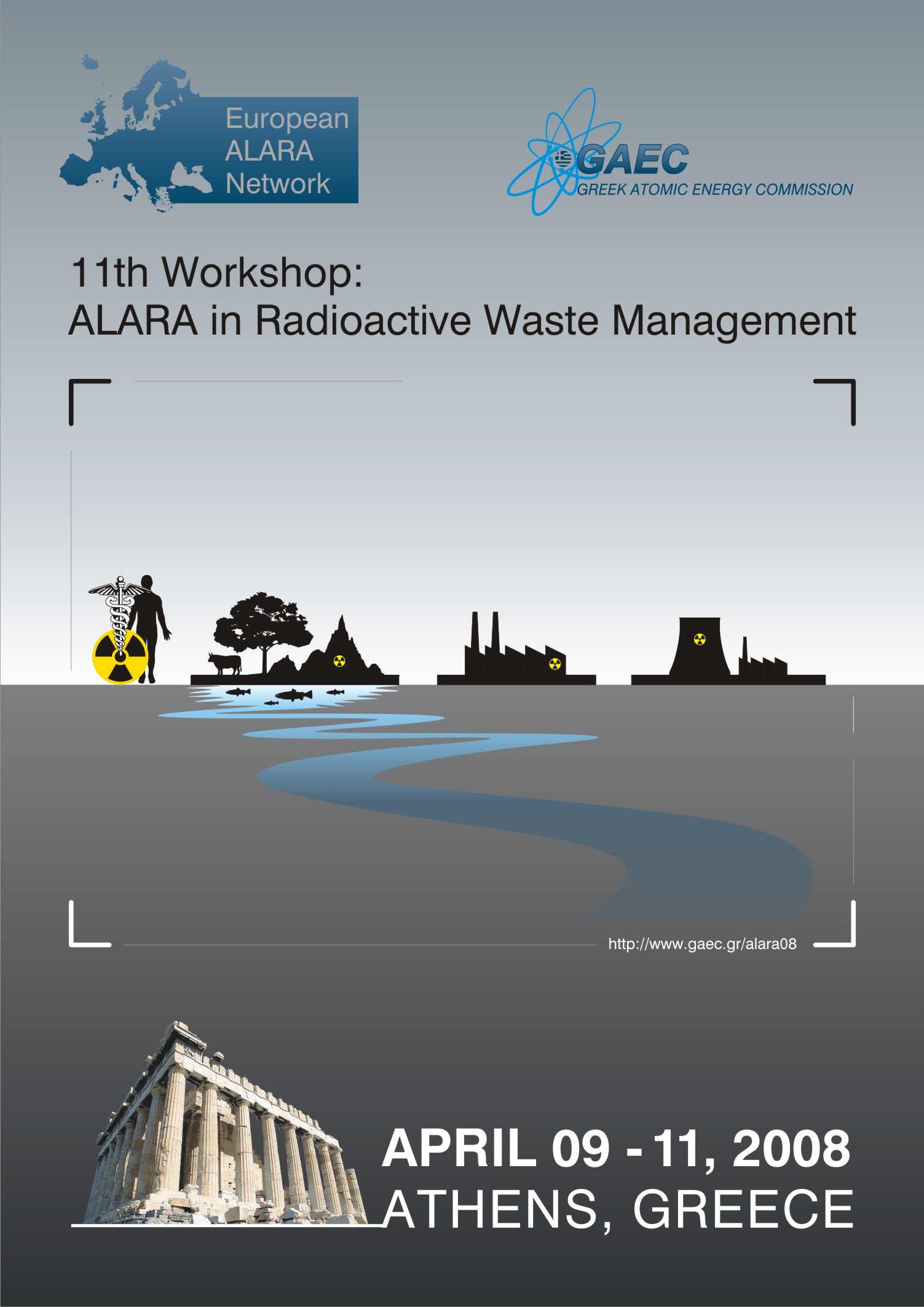
The 11th EAN Workshop on "ALARA in Radioactive Waste Management" was held in Athens (Greece) from April 9 to 11, 2008. The Conclusions and Recommendations are now available in the Workshop section. You will also be able to download the full papers and the power point presentations.

Read more

11th Workshop on « ALARA in Radioactive Waste Management »

« ALARA in Radioactive Waste management », Athens, Greece, 9-11 April 2008
ws11.jpg

pdf.pngDownload the Conclusions and Recommendations


See the pictures of the 11th Workshop

The aim of the 11th EAN Workshop was to focus on the implementation of the ALARA principle with regard to occupational and public exposures arising from the management of radioactive waste. This included waste from the nuclear, medical, NORM, industrial, education and research sectors.

As with previous workshops, this workshop consisted of presentations (oral and posters) intended to highlight the main issues, and a significant part of the programme was devoted to discussions within working groups with . From these discussions, participants produce drecommendations on ALARA in Radioactive Waste Management addressed to relevant local, national and international stakeholders.

Working Group Topics

  • Dealing with doses – how to take account of different dose distributions, worker and public doses, doses over long timescales, etc.
  • How should ALARA be applied and implemented in the areas of re-use and recycling of radioactive residues?
  • How should ALARA be applied and implemented in the area of disposal of radioactive waste?
  • Why should different strategies be applied to the different sectors and what should these differences be?
  • What are the main criteria that should be used for decision-making in the management of radioactive waste?
 

Read more